‘I feel like something bad is going to happen to me. I feel like something bad has happened. It hasn’t reached me yet, but it’s on its way.’ – Alice Palmer, Lake Mungo.

How do we perceive truth? Marcus Aurelius believed ‘everything we hear is an opinion. Everything we see is a perspective, not the truth.’ Thus, truth becomes a concept entangled within our own lives, our own perspectives. In the age of technology, truth therefore becomes even further entangled within the digital, as facts and falsehoods become interwoven in a technological whirlpool. This clash of truth and perception in the digital age is explored in the scariest movie I’ve ever seen; Lake Mungo.
*Warning – major spoilers ahead.
Lake Mungo, released in 2008 and directed by Joel Anderson, is a horror found footage/mockumentary that focuses on the death of Australian teen Alice Palmer, and the unsettling events that unfold thereafter. Lake Mungo, although not popular upon initial release, has since grown a cult following, and has become widely praised for its eerie tone and one singular jump scare that has truly embedded the film as one of the greatest horrors all time.
But Lake Mungo is more than a ghost story; it’s a story that explores the concept of understanding death in the digital age, and the presence of ghosts in the technological. The film is set up as a mockumentary, with realistic talking heads from Alice’s friends and family as they reflect on her passing. From this premise alone, the mere concept of objective truth is being manipulated. The notion of documentary itself is often debated, as many argue that as truthful as it may aim to be, there is always some form of perspective placed upon the material. Paula Rabinowitz investigates this notion, stating ‘the documentary film differentiates itself from narrative cinema by claiming its status as a truth-telling mode. However, as a filmic construction, it relies on cinematic semiosis to convince its audience of its validity and truth.’1 Therefore, as Rabinowitz points out, documentary is a truth-telling medium which simultaneously employs cinematic devices to manipulate the truth into entertainment. Here is the crux of the Lake Mungo as a mockumentary form, as we can ask ourselves, are factual supernatural ‘documentaries’ really all that different from fictionalised narratives?
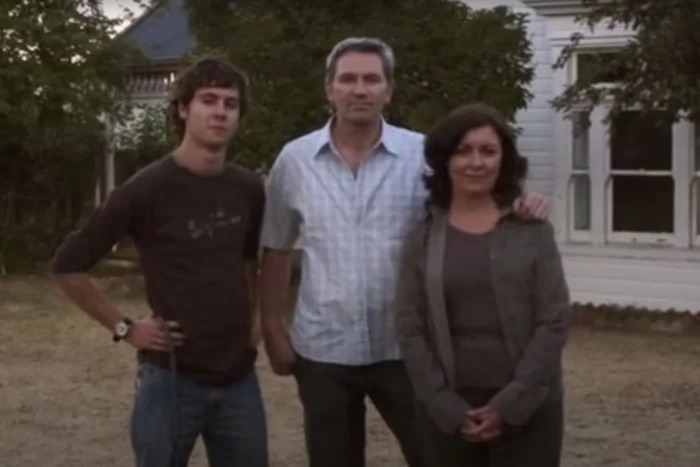
Although Lake Mungo starts out as many ghost investigation documentaries do, with creepy images of Alice’s spirit being captured by her brother, half way through the film the rug is pulled from under us, as it is revealed Alice’s brother Mathew has been faking these images all along to try and give his family some closure. This twist takes the film in a new direction, as this leads the family to uncover things they never knew about Alice; like her relationship with their next door neighbours, who were essentially grooming her as she was underage. The film then becomes a reflection on grief, and wanting to believe in falsehoods to try and make sense of tragedy. The mockumentary form facilitates this, as documentaries are too often trying to make sense of their subject matter in a way that will empathetically appeal to its audience.
Mathew’s faked images reminds us to always question what we see onscreen, criticising our over reliance on the media to separate fact and fiction for us. This is particularly true when considering media pertaining to the supernatural, as the line between what is real and what is not is already blurred. TV shows such as Ghost Adventures or Most Haunted exploit this by claiming that the shows are for ‘entertainment purposes only’ while simultaneously presenting themselves as factual and truth-telling. Yet, in this case, seeing is not believing, as Lake Mungo proves that images and sounds can be manipulated to serve a certain narrative, usually at the expense of someone’s grief.
But with Lake Mungo, it goes deeper than just the mockumentary format. The film attempts to understand what a ghost becomes in the digital age, as it is revealed that although the images and videos of Alice were manipulated, the real Alice (specifically her ghost) was there all along; we just weren’t focused on her. Thus, our perception of time becomes non-linear, as technology in this film creates a past, present, and future all at once. The past is the old images of Alice, edited to seem like her ghost; the present is her real ghost captured in these images, going unnoticed; and the future is Alice seeing her own ghostly figure coming towards her at the titular location which is revealed in a video clip found on her cell phone.
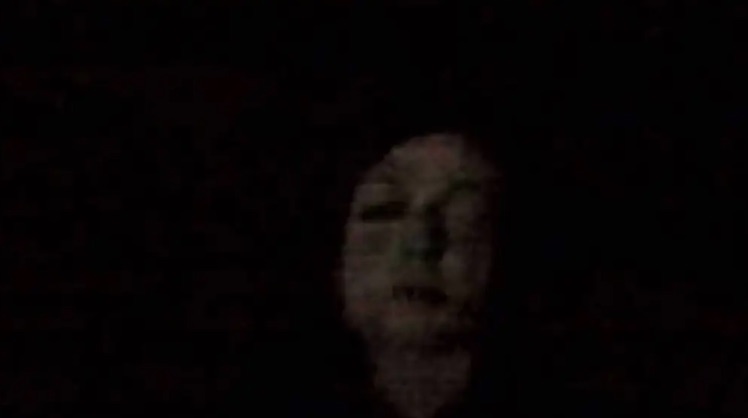
Technology therefore facilitates the meaning of a ghost; a nebulous image or incorporeal being of a dead person that manifests itself to the living. Like a ghost, technology has the means to transcend time, as in every old photo we look in, there is an image of the past that no longer exists. When it is revealed at the end of the film that Alice has been there all along, we are reminded that Alice was always a ghost in some way; she was never truly seen in life, suffering the same fate in her death. The whole story revolves around Alice, as we hear about her from her loved ones, watch videos of her before she died, and ultimately see her death. And yet, despite all the footage we are presented about her, we really never know her. We are presented truths about Alice that unravel as both the audience and her family realise she was never understood; and now, she never can be. When I think about Alice, I think about the digital isolation we are trapped in. I think about the version of ourselves we present as a perceivable truth. I think about how death is exploited in the media and the mass grieving for people we don’t even know. I think about how Facebook and Instagram are digital graveyards where our images linger long after death. And I think about how Alice’s image lingers long into the credits, a depressing reminder that she was always there, we just never looked hard enough to find her or her truth.

Lake Mungo employs technology to not only obscure and distort what is real, but to leave behind a digital trace as an insight into Alice Palmer’s truth, both in her life and afterlife. A saddening view of what it feels like to never be seen by those around us, Lake Mungo is a stark reminder to never trust what you are explicitly being told; there is always more hiding beneath the murky surface. Technology transcends the barrier between life and death, but it fails to transcend the barrier between the digital and the human condition. Alice just becomes another ghost trapped in a photograph. As she stares at us from the window in her old home, once again unnoticed by her family, we are reminded that in the digital age, death is no longer a finality.
Paula Rabinowitz, ‘Wreckage Upon Wreckage: History, Documentary and the Ruins of Memory’, History and Theory, Vol. 32 (2), 1993, pp. 119-137, p. 119, < hSps://www.jstor.org/stable/2505348 > [Date Accessed: 20/11/23]
↩︎

 The Scream Queen
Leave a comment