In 2002, Danny Boyle’s 28 Days Later reimagined the weary landscape of the zombie film. Suddenly, the undead were no longer crawling out from graves, eating brains, and wandering aimlessly; they were infected with the ‘Rage’ virus, that made them relentlessly fast, violent, and terrifying. Paranoia in the face of a collapsing society, the tragedy of 9/11, and the fears that always linger defined what 28 Days Later was really getting at. And now, in a post Covid / post Brexit Britain, 28 Years Later returns (alongside Boyle and screenwriter Alex Garland, who were both notably missing from 28 Weeks Later) to those ever-present fears to explore the dangerous infection of isolation.
* Minor spoilers ahead.
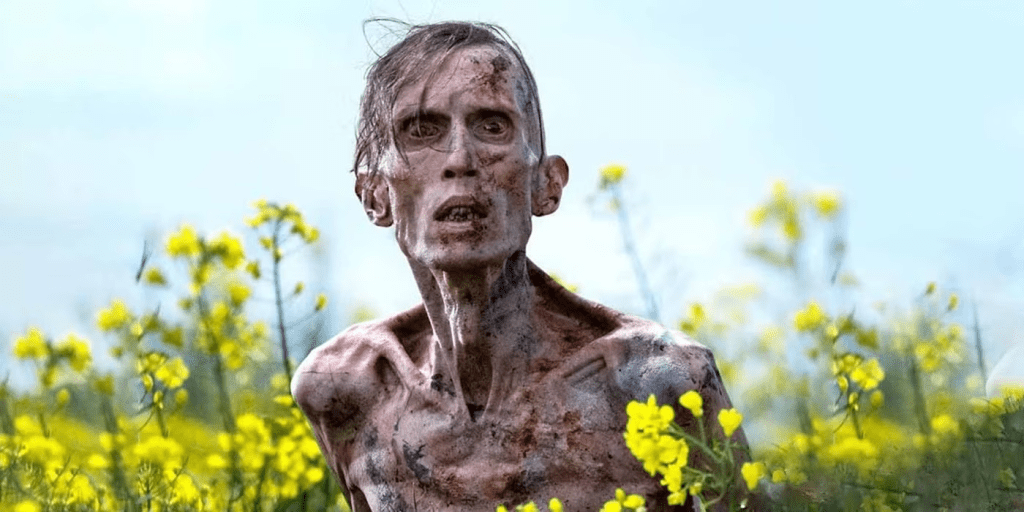
28 Years Later takes us back to the beginning of the outbreak for the opening sequence to nerve-inducing success. Not one to shy away from the bleak realities of tragedy, within the first 5 minutes of the film the infected attack and kill a group of children in the Scottish Highlands. The scene is underscored by the children watching Teletubbies on TV, as they slowly realise what is happening around them. It is a depressing loss of innocence that nicely sets up the tone to follow.
Flash forward almost three decades and we are confronted with a reality that looks a lot like our past – a regression into pre-industrial Britain. The UK is now the only country currently still affected by the Rage virus, and as such is under quarantine conditions. For the remaining survivors, such as those in a commune on Lindisfarne, or Holy Island, life continues in isolated mundanity, as we are introduced to our protagonists; 12 year old Spike (Alfie Williams), and his parents, Jamie (Aaron Taylor-Johnson) and Isla (Jodie Comer). Performances from the leads, including Ralph Fiennes as Dr. Kelson, are great all round, but breakout star Alfie Williams conveys the pain and confusion of coming-of-age in a post-apocalyptic landscape to an astounding measure. His journey through the overgrown wasteland that was once a thriving city is one which explores how being isolated for so long becomes an infection in itself, as the lines between who to trust and who to distrust become blurred.
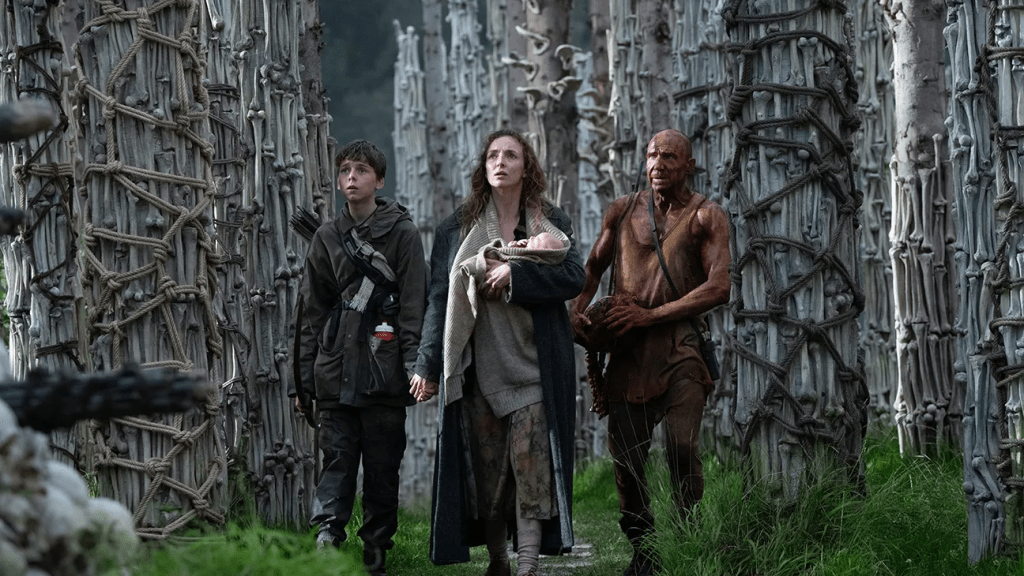
At its heart, 28 Years Later explores the damage to younger generations, for whom the world has been decimated. The post 9/11 tensions that haunt the first film are still present to this day; they will never go away. The film hones in on the idea of a yearning to return to the ‘good old days’, but ponders what that really means for our uneducated and misinformed characters. Boyle’s striking direction only amplifies this, as his experimental style of intercutting real images of the past with the world we are watching is filmmaking rarely seen in mainstream media anymore.
There are a few plot points here that I don’t enjoy, particularly the one concerning the baby; however, as much as there is going on, they conglomerate into a successful story that is part zombie horror, part family drama, and part rumination on death itself. The ending takes an unexpected tonal shift, which some will enjoy and others will not. It may take time to come round on, but when you realise the seedy underbelly it is hinting at, you will be sure to walk away with a sickening sense of dread. Its a shame the ending relies on the sequel for answers, as 28 Years Later struggles to stand as a singular entity. But if this instalment is anything to go by, the rest of the trilogy proves to have a promising future.

Final Verdict:
Sharp, shocking, and a satisfying return for Danny Boyle and Alex Garland’s 28 franchise; these films continue to rage on as some of the most original within the zombie sub-genre (if you even consider them zombies in the first place). It has its flaws, particularly within its large pastiche of ideas, but ultimately its ravenous view of a post apocalyptic world lends itself to Boyle’s stunning direction.


 The Scream Queen
Leave a comment