Hello reader, I want to play a game. After spending days watching all 10 films in the Saw franchise, it’s time to rank them. Torture porn traps, plot hole filling flashbacks, and one very infamous puppet encapsulate the ethos of Saw over the combined runtime of 16 and a half hours. But which movies are torturously painful and which ones are worth living for? It’s time to make that choice.
* Major spoilers ahead! Also this list does not include the 2003 short film as it is not canon within the franchise.
10. Spiral: From the Book of Saw (2021)
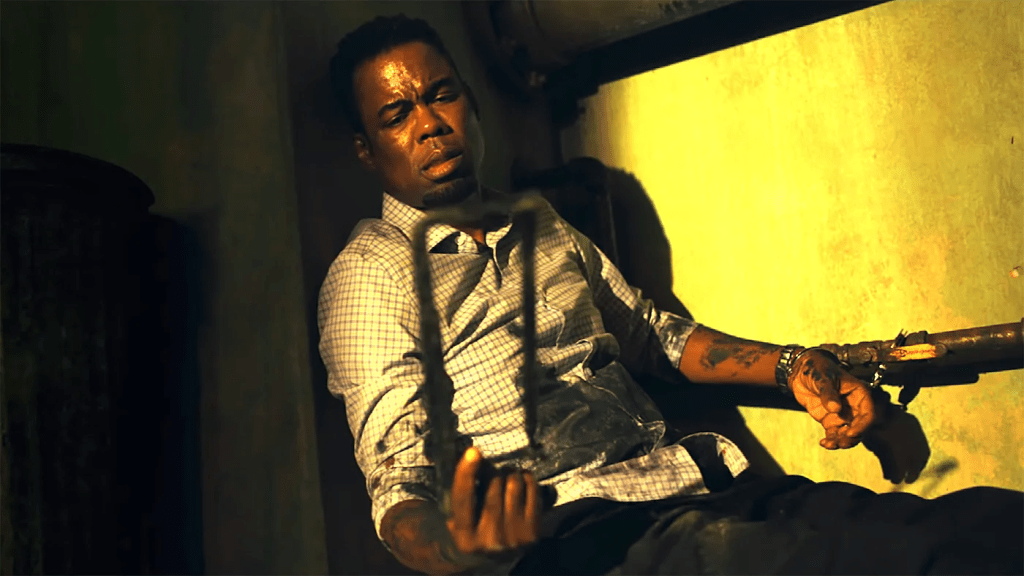
The only film in the Saw franchise that does not explicitly feature Tobin Bell as John Kramer, and that alone is more than enough reason for it to be ranked last place. Aside from this, however, the film is still an agonising mess that feels far removed from the rest of the franchise; mainly because it is a Chris Rock fronted spin-off set in the same universe as the Jigsaw murders. According to interviews, Rock wanted to take his career in a different direction, and felt that entering the world of horror was the way to do so. Thus, Rock, a self confessed fan of the franchise, pitched the idea of reinvigorating the Saw franchise to Lionsgate, and Spiral was born. Spiral leans hard into the cop plot element of Saw, as we see Detective Zeke Banks (Rock) at the centre of a Jigsaw copy cat killer spree aimed specifically at, you guessed it, the corrupt police department. Spiral slowly edges away from the campy tone of the previous entries to try and take the franchise in a more serious thriller direction. And yet, the film begins with a man’s tongue being ripped off. Tonally, Spiral is splattered all over the place. Rock’s mega serious interpretation of Detective Banks plays like he’s in a David Fincher film, while still dropping one liners and jokes as if he’s in a stand up show. However, this is still not as head scratching as Samuel L. Jackson’s involvement, as he is underutilised in his role as Banks’s father, Marcus. Despite being arguably the biggest star to ever feature in the franchise, his role is so forgettable that most people would never even know he was in a Saw movie at all. Forgettable is the word which fully sums up this film, especially compared to the rest, from it’s dull traps that are few and far between to its lazy twist that felt pigeon-holed in for the sake of a shock ending. In the grand scheme of the franchise Spiral can, and should, be skipped.
Favourite Trap: The Hot Wax Trap
Favourite Quote: ‘Jigsaw copycat. That shit’s gonna go sideways fast’ – Marcus Banks

9. Jigsaw (2017)
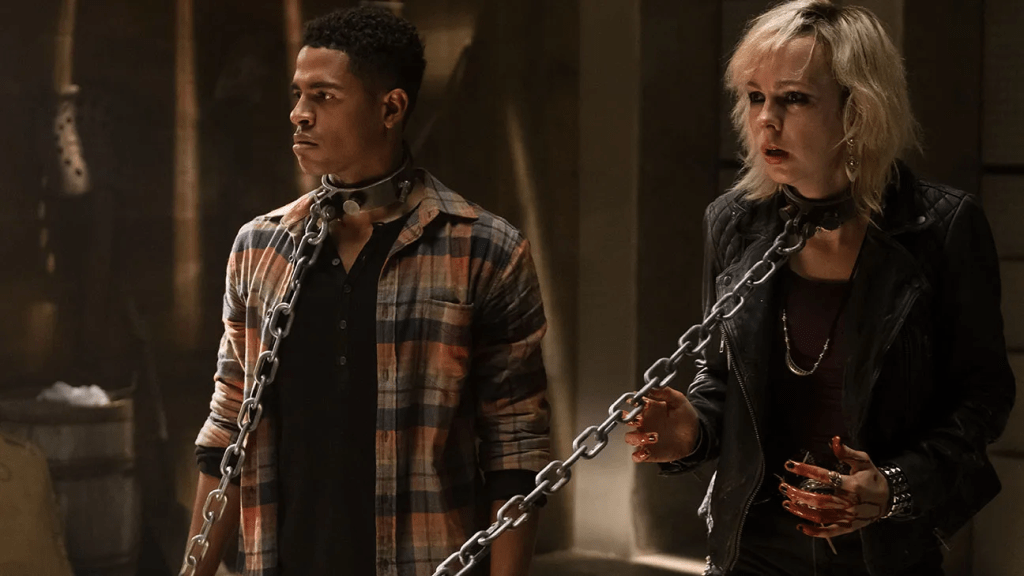
Let’s get one thing clear; there’s not much between Spiral and Jigsaw in terms of quality. Both function poorly as Saw instalments and not just because they stray from the original storylines. There’s only 2 reasons why Jigsaw edges out Spiral for the ninth spot rather than dead last; the traps and John Kramer. Released in 2017, Jigsaw is far too glossy to be considered a truly great Saw outing. Instead of desaturated colouring and quick cut edits, Jigsaw is more tonally aligned with crime tv thrillers like NCIS or Criminal Minds, shying away from the campiest aspects the franchise has to offer. This is mostly due to the period in which it was made; a precursor to the ‘elevated’ horror movement, the genre in the mid-2010s was moving away from ‘low-brow’ remakes and torture porn movies that dominated the noughties; an era for which the original Saw was somewhat accountable for. Thus, in an attempt to shake off the bad taste left in many horror fans’ mouths from this time, Jigsaw re-centres the franchise as something to be taken seriously, to dire consequences. Aside from stylistic issues, Jigsaw’s plot is one which messes with the already intricate series through line in a way which makes no sense whatsoever. The main protagonist of Jigsaw is Logan Nelson; a forensic pathologist trying to solve a recent string of Jigsaw murders taking place in a barn. It comes as no great surprise when it is revealed that he is actually the one who set these games up, as if not for this reveal there isn’t much point to his character at all. The red herrings are all too obvious, and an insane plot line that suggests John Kramer may have returned from the dead is totally ridiculous even by the franchises’ ludicrous standards. However, John Kramer does appear in flashback mode (it wouldn’t be a Saw movie without a flashback) as it’s revealed that the games we are watching actually took place 10 years ago; in fact, they were the first ever games to be played. Logan Nelson (who was saved from these games and thus became the first ever Jigsaw apprentice) is therefore recreating these games in the present because… well actually there’s not really any reason other than for the twist. It’s messy and, although makes sense in the moment, is head scratching in terms of where it fits into the timeline. Logan Nelson is bland, boring, and we never see him again. That being said, Jigsaw has some great traps which save it from being the worst in the franchise (just). From the grain silo with a deadly array of weapons falling from the sky to a shiny new motorbike trap that turns people into noodles, Jigsaw is a satisfyingly sick reminder of the creativity of John Kramer. It’s a shame that it’s also a reminder of what the worst aspects of the franchise have to offer. If this movie was removed from the series then absolutely nothing would change, and for that, it deserves its spot in second last.
Favourite Trap: Laser Collars
Favourite Quote: ‘Ten years ago a game was played’ – Logan Nelson
8. Saw V (2008)
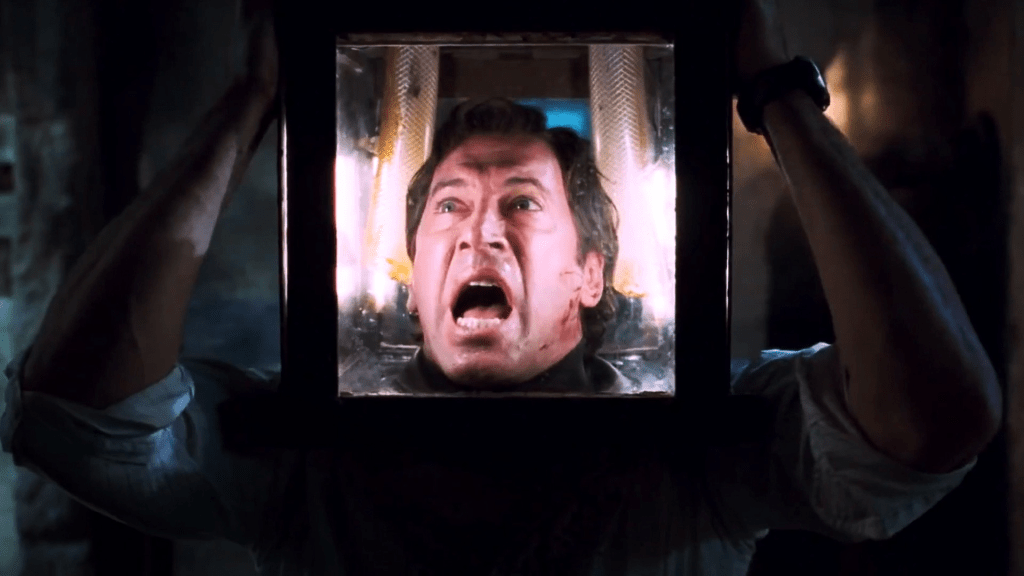
The mid-instalment of Saw is where the films begin to transition away from their original style and plot line into what would become the later instalments. The trap plot in this one is mostly un-noteworthy, as it prioritises a group of people who were all perpetrators of a fire which ended up killing innocent civilians (the usual). It’s the classic formula of having 5 people all trapped together, believing they must fight one another off, when they all could have survived if they had just worked together. This revelation is obvious from the minute the games begin, with traps that are. However, this is a rare case where the trap plot is secondary; in fact, it feels detached from the film entirely. The main plot of Saw V centres round Mark Hoffman VS Peter Strahm (Scott Patterson), as the two detectives are onto each other. Hoffman and Strahm bring a lot to Saw after John Kramer’s death, as the two bounce off each other in endearing fashion. Additionally, their respective actors, Costas Mandylor and Scott Patterson, clearly take their roles seriously and it shows; they understand the tone of the films but similarly are unashamedly apart of them. Hoffman facing off against Strahm is the highlight of this film, which directly carries on from the previous film as Strahm finds himself stuck in a saw trap where his only option is to give himself a tracheotomy. He’s one of the few characters in the franchise to survive a trap on screen, but unfortunately he still doesn’t make it out alive; at the end of the film, he finally uncovers the truth that Hoffman is indeed acting on Jigsaw’s behalf, but only moments before being crushed to death. It’s a brutal and shocking final trap that is up there among the greatest. It’s a shame that aside from a strong beginning and end, the narrative fails to mesh together in a cohesive manner, the two separate plots never intertwining in a meaningful or interesting way. Saw V is essential in establishing Hoffman as the primary antagonist for the next 2 films, but in turn becomes a filler movie that merely exists to keep the cogs of the franchise turning.
Favourite Trap: The Glass Coffin
Favourite Quote: ‘Killing is distasteful… to me’ – John Kramer
7. Saw IV (2007)
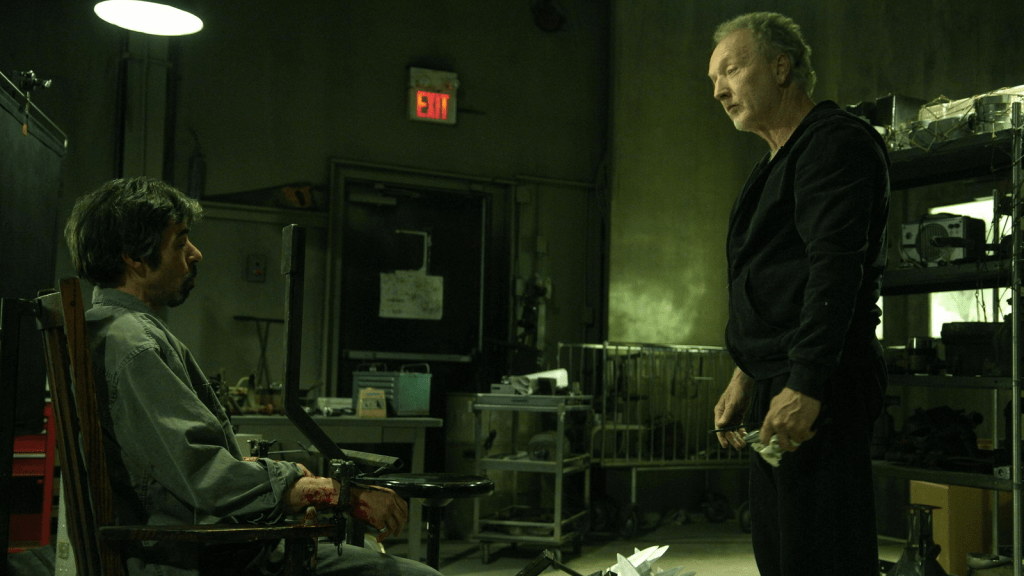
It’s impossible to not rank Saw IV and Saw V together, as they essentially work in unison. Their plots are interlinked in a way that makes them hard to separate, however Saw IV has the edge of bridging the gap between original characters we have been following and the new characters that are about to replace them; plus the trap plot is on the main stage here, blending seamlessly with the coinciding cop plot in a way that does not feel forced like in Saw V. This instalment begins by confirming John Kramer’s death, as we see his body being autopsied with a tape found in his stomach (obviously). The tape is addressed to Hoffman, who also starts to take on a more prominent role here, as his villainous status is revealed at the end of the film. Saw IV manages to fuse the trap and cop plot by having the cops actively involved in the traps, as its time for Lieutenant Rigg to be tested; the reason being that he was too obsessed with saving others (stupid reason). The traps in Saw IV aren’t quite as disgusting as its predecessor, but there’s a lot of good backstory going on here; in fact, half of the film basically operates as a flashback. We learn about Jigsaw / John Kramer’s very first victim, and the reasoning behind his sadistic plans to test people’s willingness to survive, as his tragic backstory involves the loss of his and Jill Tuck’s unborn son, Gideon (whom Jigsaw’s lair is named after). The flashbacks are also an ingenious way to incorporate John Kramer back into the narrative after his death in Saw III, as Tobin Bell is arguably one of the main reasons the films work as well as they do. The editing of these flashbacks is also a strong suit of Saw IV, creating a new narrative style that helps to expand the universe both in the past and the present. But at times, it does make the story hard to follow; the continuous jumping back and forth means you really have to stick with the film, which is at times on the boring side. The film does pick up towards the end however, and seeing Eric Matthews’ head crushed between two blocks of ice feels like a fitting end for his story.
Favourite Trap: The Ice Block Trap
Favourite Quote: ‘Girl loves boy. Boy loves girl. Boy gets girl pregnant. Girl loses baby; boy turns into a serial killer.’ – Peter Strahm
6. Saw 3D (2010)
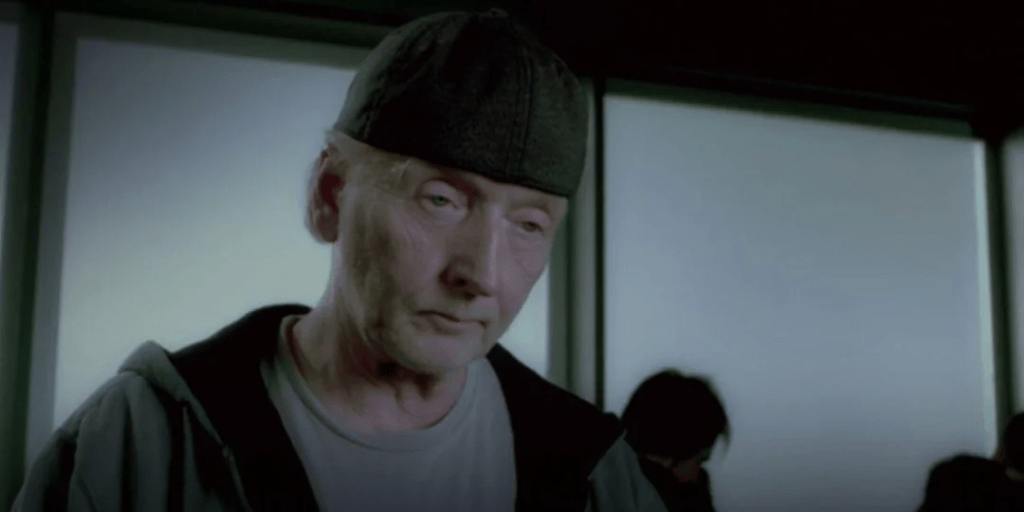
The biggest indicator that a movie was released between the years of 2009 and 2012 was if it was in 3D, particularly if that movie fell into the category of horror. Bonus points if they included 3D in the title, like Saw 3D otherwise known as Saw: The Final Chapter. Rounding off the plot line that follows through the first 7 instalments of the franchise, Saw 3D is widely regarded as among the weakest, despite it’s gimmicky effects, cameo from Chester Bennington, and $17 million budget. Reaching a new level of schlock, Saw 3D gets intwined in its own convoluted plot, which becomes downright ridiculous. The only remaining Jigsaw apprentice, Detective Mark Hoffman (Costas Mandylor) transforms into a full moustache-twirling psychopath here, as he literally goes around killing everyone he can, including the people he has placed in the trap plot, an entire police department, and John Kramer’s ex-wife Jill Tuck (Betsy Russell). No one is safe in Saw 3D and the body count is higher than ever; but within this, Saw begins to lose itself, as it is a true mark of how far the franchise had fallen since the mostly gore-free original film. Saw 3D is brutal and relentless in a way which feels mean-spirited, distinctly towards the female characters, who suffer far more than their male counterparts. The trap plot revolves around Bobby Dagen, who has garnered a following and career from pretending to be a saw trap survivor. Obviously, he gets caught out in his web of lies, and John Kramer’s plan for him is implemented from beyond the grave. There is only one male, aside from Bobby, who features in the traps, and his death is significantly less horrifying than the women involved. While he is hung for his complicity, his female counterparts are cruelly impaled in vicious and nasty traps. However, perhaps the most sadistic death to feature in any Saw movie, Bobby’s wife (who was unaware of her husband’s lie) is placed in a brazen bull where she is cruelly cooked alive. Her death entirely goes against the loose morals that Jigsaw plays by, and only further proves the misogynistic tone that courses through this films veins. Similarly, in a moment which feels imbued with sexism, we finally see the reverse bear trap in full effect, as Jill Tuck suffers through its torture at the hands of Hoffman. As a woman who has gone through unimaginable pain through the franchise, including having a miscarriage and her husband becoming a serial killer, Jill Tuck’s death is a tragic end which provides no hope. However, John Kramer becomes seemingly psychic here, as he leaves a tape predicting that Hoffman would turn on Jill and kill her. And who is this tape for? A secret apprentice that has been helping John this whole time. Someone we’ve known since day one. Yes, that’s right; Dr. Lawrence Gordon. It is a laughably bad twist, but honestly might be the best part of the film. Seeing Lawrence return after 6 years is a reminder of how insane the plot of Saw is, and although it is incomprehensible that they decided to bring him back in the final instalment to fill in any plot holes from the other movies, its a decision that only the Saw movies can make work. So, why is Saw 3D ranked at 7th place despite its glaring flaws? There’s only one reason; it’s super entertaining from back to front, it has brutally themed traps, and Mark Hoffman’s turn as a joker-esque villain may be the campiest thing to happen to the franchise; there is definitely a love/hate relationship with Saw 3D, but ultimately (and unfortunately), I am one of its defenders.
Favourite Trap: The Horsepower Trap
Favourite Quote: ‘You, your girlfriend, and your friends are all racists.’ – Jigsaw
5. Saw X (2023)

John Kramer is back! And he’s… the good guy? That’s right; Saw X manages to find an antagonist that is more sadistic than a tortuous, pig-mask-wearing serial killer. But let’s go back to the beginning. Released in 2023, Saw X brings back much of the cast and crew of previous Saw instalments to reinvigorate the franchise once again. A much needed return to form after the disastrous Spiral, Saw X goes back to basics (or as basic as Saw can be) as a prequel taking place between Saw and Saw II. Travelling back in time to when John received his cancer diagnosis, the film follows him as he is promised a miracle surgery in Mexico that will cure him. For once, John Kramer is filled with hope, even abandoning plans for his traps and looking to the future. It’s all a bit too promising for a Saw movie, and we know it’s not going to last. Alas, the miracle surgery is a scam, lead by chief conwoman Cecilia, whom is one of the nastiest characters the franchise has to offer. The characters in Saw X help to fulfil the films potential, as they don’t feel like throwaway cannon fodder, despite that being their main purpose. It’s genuinely heartbreaking to see Gabriela killed by Cecilia after surviving her trap, and even more disturbing when Cecilia places a child in a trap (if you’ve not seen the film, don’t worry; John Kramer saves him). Of course, Amanda is the cherry on top; a fan favourite, it was inevitable that she would return, alongside a fun cameo from Hoffman in a post credit sequence. Saw X was bold enough to not be ashamed to be a Saw film in the 2020s, which can partially be attributed to the reclamation and re-evaluation of campy y2k culture; people are no longer ashamed to admit their love for the so called ‘low-brow’ media produced in the noughties. Although Saw X doesn’t quite capture what made the 2000s so special, it’s close enough. Saw X looks great, not too glossy like Jigsaw, while still maintaining the signature colour palette and editing that makes Saw unique in its own right. At times, it feels slightly dragged out, with the longest runtime of the franchise at almost 2 hours, but it packs a lot of that time with inventive traps and effective world-building. In fact, Saw X may have some of the most savage traps in the series, including one which involved bone marrow sucking and another which involves brain matter removal. Saw X sets the franchise back onto the correct path while managing to not further complicate the series, which is a mean feat for the tenth film in a franchise. It proves that Saw still has much to offer, and it’s gross of $125 million compared to its $13 million budget suggests that the fans aren’t ready to leave behind John Kramer just yet.
Favourite Trap: The Wire Saw Trap
Favourite Quote: ‘Out of all the men to cheat, you picked John Kramer. I mean, I call that epic back luck.’ – Mark Hoffman
4. Saw III (2006)
It’s hard to explain the importance of Saw III to a non Saw fan, and even harder to explain that John Kramer is killed off this early in the franchise, despite returning for another 6 subsequent films. Saw III is crucial in continuing the storyline from the first 2 films while establishing the narrative that will go on to define the rest of the series. A number of important events occur here; we are introduced to Hoffman, who will go on to become the primary antagonist of the next 4 movies; we briefly meet Jill Tuck in a flashback; and both John Kramer and Amanda are brutally killed off despite being arguably the two largest characters in the franchise. It’s a meaty movie that never dulls, and utilises its runtime of 1 hour 48 minutes to its full potential. There’s so much plot going on here that you have to keep up, but unlike 4, it never feels too complex that you begin to lose track. There are 3 main stories we follow in Saw III: Jeff Denlon’s trials; John, Amanda, and Lynn; and Hoffman cop plot. Saw III strikes a sweet spot of now having established characters that it can begin to kill off or interweave into the next few films. Each plot line feels like it has something at stake, and the deaths are still shocking, as we haven’t yet entered into the Saw territory where everyone dies. Saw III goes much harder on the traps than its predecessors, and begins to truly establish the tone of the entire franchise. Being drowned in a vat of blended pig carcasses, having your ribcage ripped open, and suffering your limbs being 360 twisted one by one are all fates to be feared in Saw III. The only downside (apart from some plot holes, like Jeff’s daughter being forgotten about) is Jeff Denlon; maybe the slowest victim to ever participate in the traps, it’s a wonder he saved anyone at all. Jeff takes his frustrating time at every chance he can, apart from at the end of the film when he fatefully kills John Kramer, which consequently seals the fate of who is revealed to be his wife, Lynn Denlon. Jeff is one of the more tragic characters the series has to offer, and despite his despairing indecisiveness, he’s well-written and developed. This, combined with the clever twists and turns along the way, bone-crunching traps, and a hefty amount of Amanda screentime, secure Saw III as one of the best entries in the franchise.
Favourite Trap: The Angel Trap
Favourite Quote: ‘You’re not Jigsaw, bitch!’ – Eric Matthews
3. Saw II (2005)
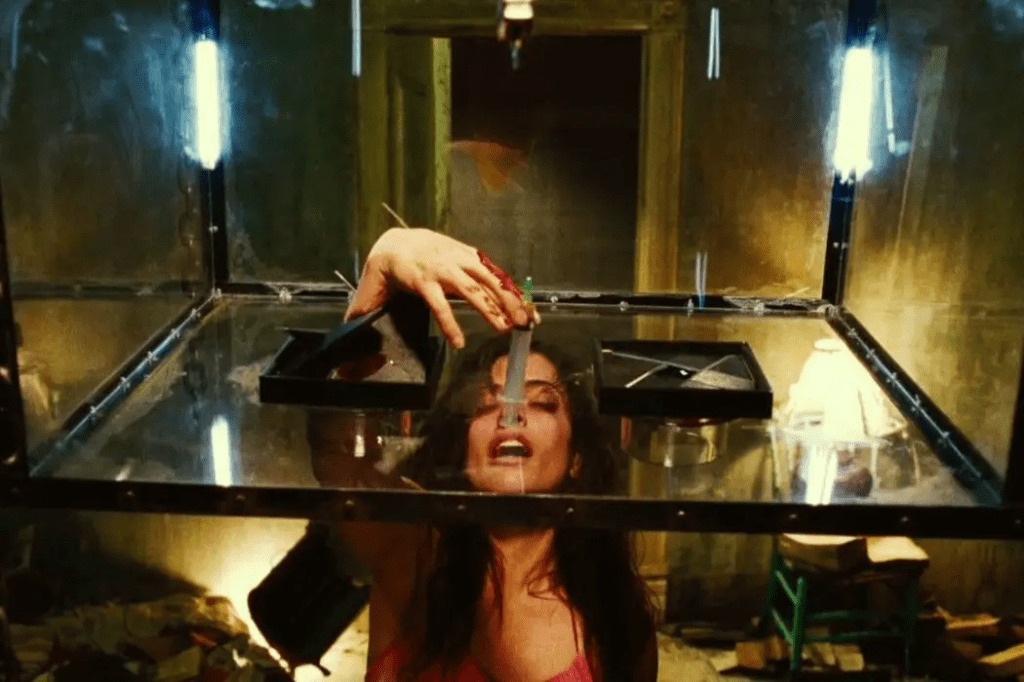
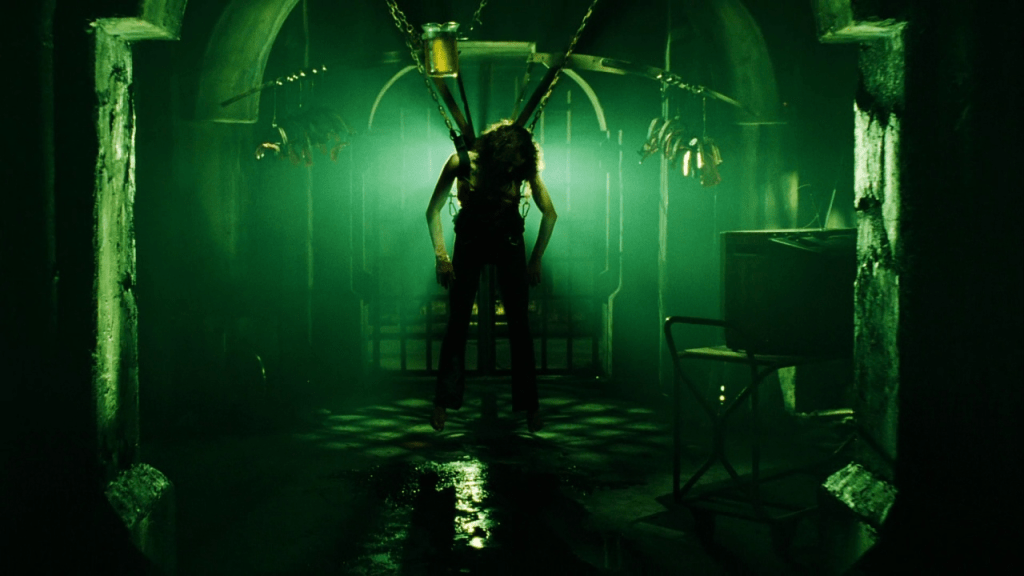
Our top 3 kicks off with the first of Saw’s many sequels. Saw II capitalises on the escape room feel of its predecessor and emulates that narrative on a larger scale. Here, we follow Detective Eric Matthews (Donnie Wahlberg), whose delinquent teenage son has been taken by the infamous Jigsaw killer. Cut to a seemingly unconnected group of convicts waking up in a creepy abandoned house that is filling up with poisonous gas. In true Saw fashion, they are told the rules they must play by to survive, although whether they truly listen to these rules is debatable. The two narratives are plainly linked by Eric Matthews through his son, but it is revealed during the third act that this has been a trap for Eric Matthews all along due to his corruption within the police force. It’s one of the many tricks that Saw II has up its sleeve, but it’s nowhere near as inventive as the return of Saw icon Amanda, who is a participant in the house trap. It feels unusually out of character for Jigsaw to place a victim in a trap twice, and it is undeniably cruel, until we realise that Amanda has been in on it the whole time as Jigsaw’s loyal apprentice. Turning Amanda into an antagonist was an ingenious move that helped secure her legendary status within the franchise. However, she is not exempt from suffering, as she endures one of the most memorable traps in the entire series; the needle pit. Not necessarily meant for her, Amanda finds herself thrown into a large pit of razor sharp needles to look for an antidote key. The imagery is seared into the mind of anyone that has seen it, and even though she survives with basically no gory injury, most will agree this trap gets under the skin. Stylistically, Saw II‘s sickly palette of yellow and green hues put a classic Saw stamp on the film which has yet to be replicated by any other set of movies. Switching between both storylines with ease, this sequel is uncomplicated narrative perfection. Ending on a cliffhanger, Saw II confidently knows that the series will be back for more blood; even if most other entries could never compare to this one.
Favourite Trap: The Needle Pit
Favourite Quote: ‘oh yes, there will be blood’ – John Kramer
2. Saw VI (2009)
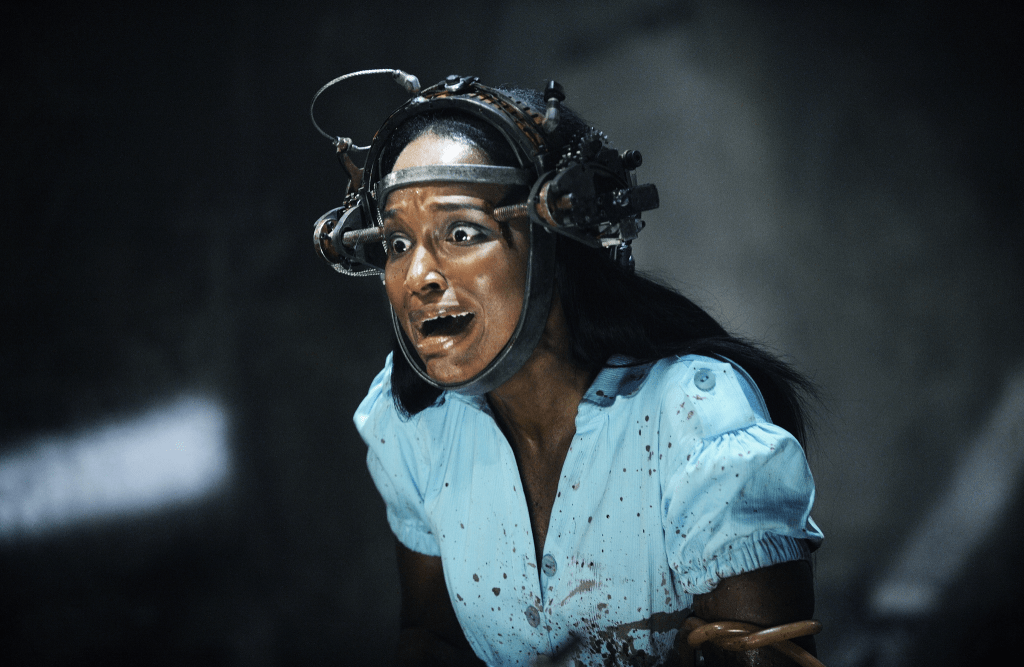
Usually, by the sixth film in a franchise, things have reached dangerously bad territory; these films are typically direct-to-video, direct-to-bargain bin nonsense that are cash grabs at best. But Saw is unlike other horror franchises; you can tell the people involved in Saw care about their franchise and, as such, Saw VI is a triumphant return to greatness after a somewhat mediocre IV and V. This time, John Kramer is taking on a health insurance company from the grave, specifically targeting the big boss William Easton (Peter Outerbridge). Easton is great trap victim fodder, as he approaches each of his trials with genuine empathy for his employees with whom he is tasked with saving. He works quickly and effectively, unlike some previous test victims (*cough* Jeff), and makes good choices throughout. Thus, the trap plot is top tier Saw goodness; alongside a main character who we want to see succeed despite his questionable morals, the traps themselves are sadistically creative. Each trap victim feels somewhat fleshed out despite their short time onscreen, and once again the film benefits from actors taking their roles seriously no matter how small. Meanwhile, Mark Hoffman and Jill Tuck go head-to-head as the police begin to suspect Hoffman’s involvement in the Jigsaw killings. It’s at this point in the series where Hoffman starts to become truly unhinged, murdering anyone who will try and stop his mission. Neither plot here outweighs the other, and there are some effective twists that are genuinely impressive considering this is the sixth instalment of the series. Targeting a health insurance company also feels spot on for Saw, and despite being released over 15 years ago, it still feels scarily relevant today; perhaps even more so than it did back then. Saw VI is a rarity when it comes to horror sequels, and is by far the most underrated in the whole franchise.
Favourite Trap: Shotgun Carousel
Favourite Quote: ‘Piranha’ – John Kramer
1. Saw (2004)
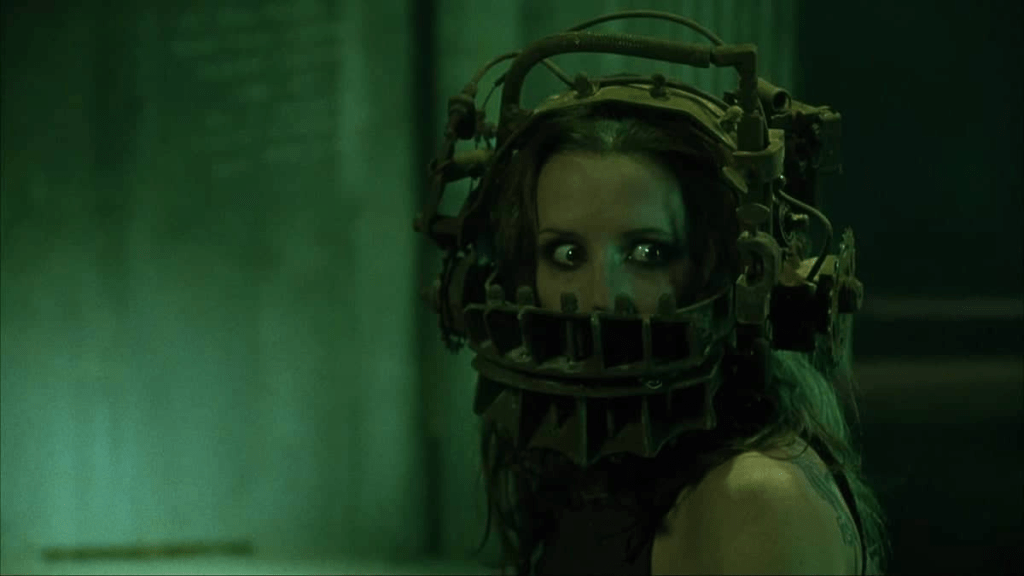
The film that started it all. Created by now modern horror legends Leigh Whannell and James Wan, Saw was a low budget concept that spawned a $1 billion dollar franchise sensation. The idea was simple; two men are chained up in a bathroom by a serial killer and must escape before the timer runs out. The catch? The only way to do so is by cutting off their chained up feet. Ironically, the franchise would go on to become far from simple, with convoluted plotting devices, flashbacks and twists all encompassing what the series is most well-known for. But in 2004, Saw redefined the landscape of horror as we know it, helping to shape the post 9/11 anxieties of the infamous torture porn subgenre. Similar to Tobe Hooper’s 1974 classic The Texas Chain Saw Massacre, Saw’s title is more evocatively violent and bloody than the film itself; in fact, Wan’s original film is notably gore-less aside from the aforementioned foot scene. Saw plays out more as a mystery thriller as the two main victims, Dr. Lawrence Gordon (Cary Elwes) and Adam (writer Leigh Whannell), must try and figure out who did this to them and why; and most importantly, how to survive. But what is most revelatory about Saw is the left-field twist that would leave even the most seasoned horror viewers in 2004 with their jaws’ on the floor. During the obligatory flashback montage that ends basically all of the Saw movies, it is revealed that the dead body that has been lying in the bathroom with Adam and Lawrence the whole time is in fact not dead; it’s Jigsaw (Tobin Bell). It’s simple, effective, and a masterful shock that is a reminder of how cleverly constructed the Saw narratives are. Stylistically, Saw is a nostalgic relic of the noughties; with its iconic desaturated green colour grading, fast-paced editing, and specifically edgy tone, it feels like it could be a music video for an emo alt-rock band. Speaking of music, Saw’s main theme ‘Hello Zepp’ has become one of the most instantly recognisable within the genre. Signalling to audiences that the narrative is about to take a deranged turn, ‘Hello Zepp’ perfectly captures the high stakes of the entire series. Saw has had an undeniable influence on the horror genre; from paving the way for torture porn exploits that ruled over the early 2000s, to growing a huge fandom that will continuously discuss every small detail of the films, there will never be a franchise quite like Saw ever again. Although the future of the series remains uncertain, there is one thing that is for sure; just like in the franchise, Jigsaw will find a way to come back time and time again.
Favourite Trap: Reverse Bear Trap
Favourite Quote: ‘GAME OVER’ – John Kramer
 The Scream Queen
Leave a comment