‘Beware; for I am fearless, and therefore powerful.’ – Mary Shelley, Frankenstein (1818).
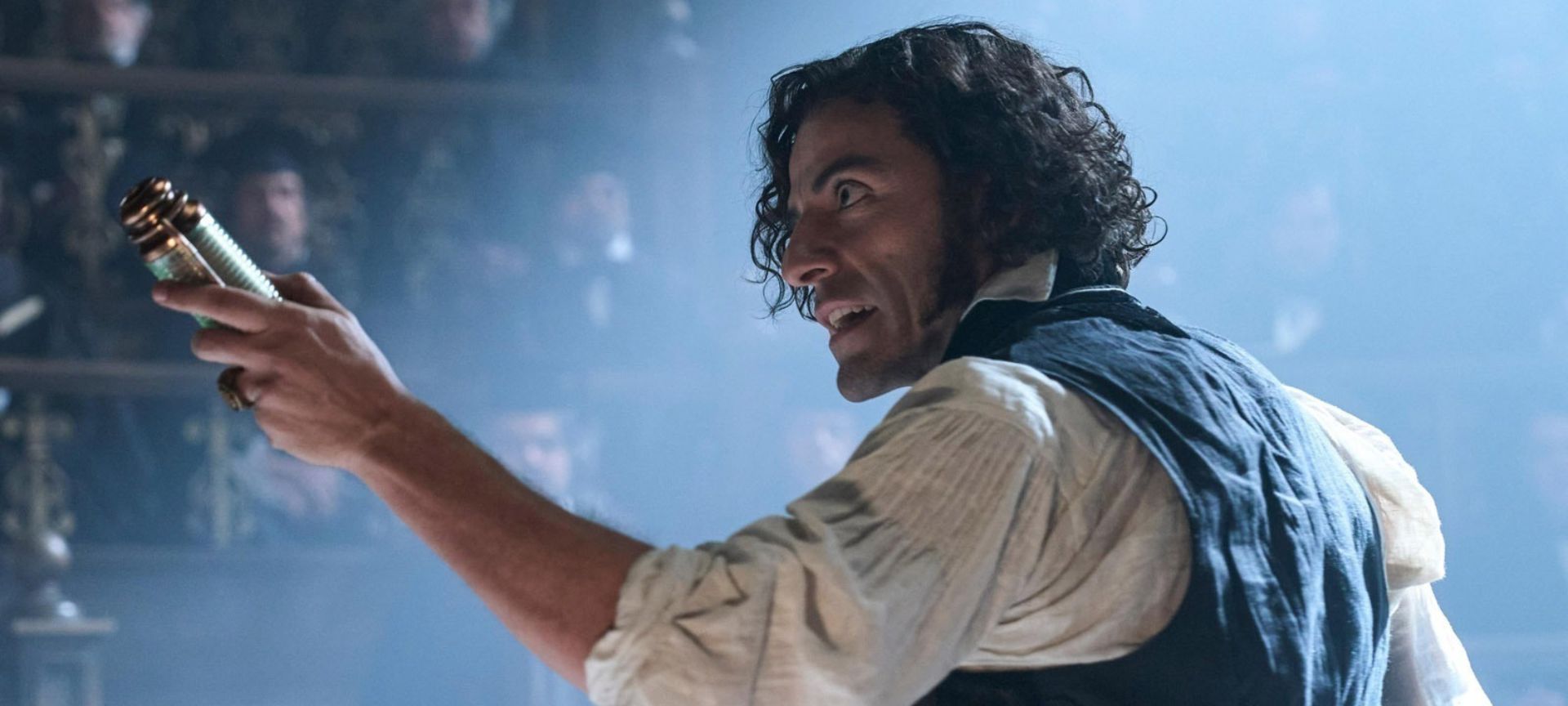
There has never been another story that has captured so poignantly what it means to be human than Mary Shelley’s Frankenstein. Universally known as a cautionary tale that warns against the moral dangers of playing God, Frankenstein remains as seminal today as when it was published in 1818. And that is why it continues to be resurrected so often; Shelley’s novel has been brought to life on the big screen time and time again, now by visionary filmmaker Guillermo Del Toro. Featuring sweeping Gothic landscapes, a stunningly haunting score, and an ethereal performance from Jacob Elordi as the creature, Del Toro’s iteration of The Modern Prometheus weaves together one of the greatest tellings of Shelley’s novel yet.

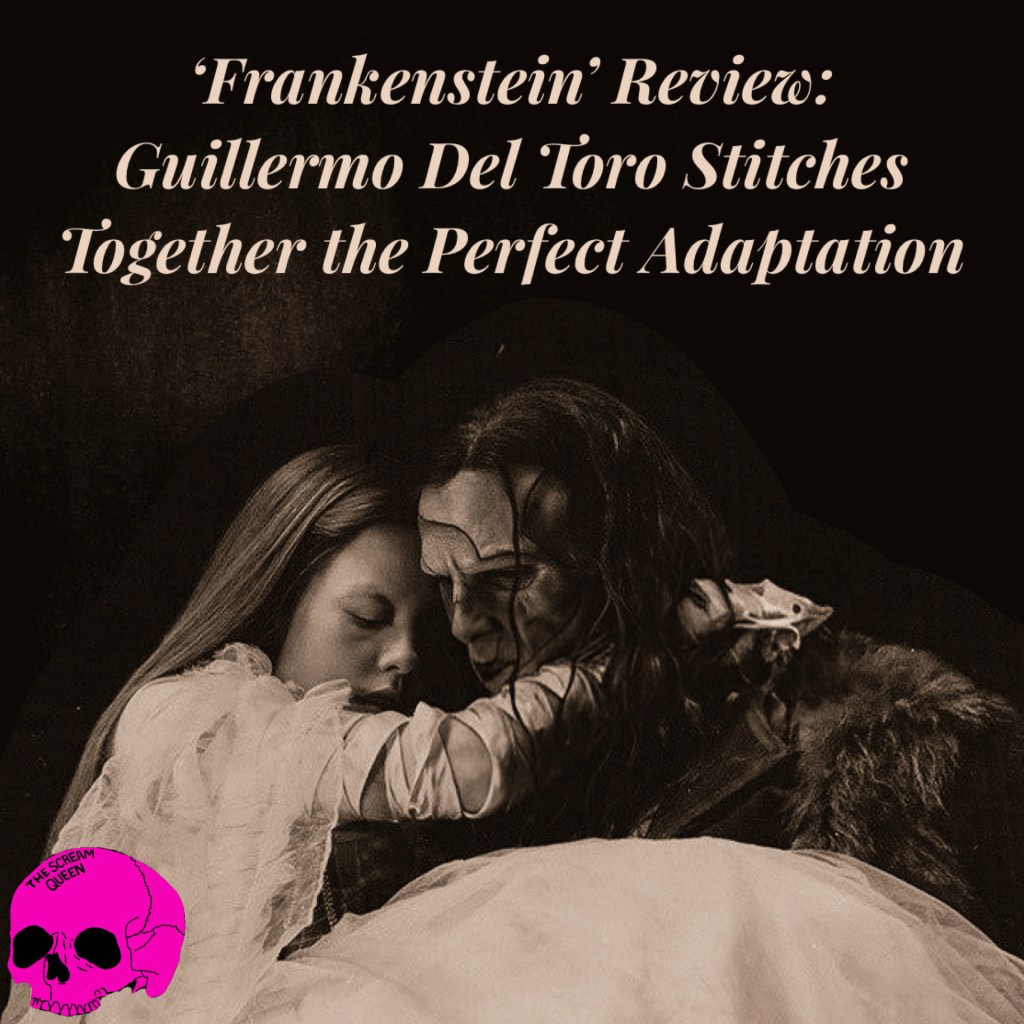
There have been many, many adaptations of Frankenstein; most notoriously, James Whale’s 1931 iteration, which catapulted the creature into the horror hall of fame. A green-skinned, square-headed, bolt-necked monster came to symbolise what we all now recognise as “Frankenstein” (of course, this is not even the creature’s name – we have just collectively, and incorrectly, decided to refer to him as such). But this is far removed from the picture of the resurrected man that Shelley paints in her novel; an 8-foot-tall being with yellowing skin and black, flowing hair who was hideously deformed and thus shunned by society around him, including by his own creator. It is hard to imagine this description matching the appearance of current ‘it’ boy Jacob Elordi, whose rise to prominence has been stratospheric since his breakout role in The Kissing Booth back in 2018. However, with the help of some deadly prosthetics, his role as Frankenstein’s creation is fully transformative; a mere glimpse into his infant-like gaze will stir even the most callous of souls. His development of the creature from an innocent childlike state to a vengeance-driven ‘monster’ searching for the smallest morsel of acceptance is what sets this adaptation apart from its peers. And although Elordi has certainly been stitched up with some questionable scripts in the past, Frankenstein is sure to solidify his superstar status.

However, there is another star in Del Toro’s film that steals every scene in which it appears: Scotland. From the cobbled streets of Edinburgh to the towering lair inside the Wallace Monument, Scotland’s ruinous landscape provides the perfect Gothic mural on which Shelley’s story is painted. Shot with a beautiful gloominess that looms over each scene as fearsomely as the creature himself, Del Toro’s style and the country I call home are harmoniously interwoven, sewing together a glorious Gothic patchwork.
Final Verdict:
How does someone reinvent one of the most culturally referenced texts ever written? Guillermo Del Toro proves that you don’t have to; if you understand your source material with a mastery such as he has, you become aware that reinvention is not the key. Rather, Del Toro has an innate instinct for how to faithfully bring Shelley’s groundbreaking novel to life. Through his enchanted eye for rich darkness, Frankenstein is transformed from Hammer horror into a tragic fairytale. At its beating heart lies the creature himself, portrayed with empathetic magnetism by Elordi, who comes to fully embody the phrase ‘I am obscene to you, but to myself, I simply am.’ Del Toro’s iteration of the creature is a transformative reframing of the voiceless monster we are too often faced with; instead, the creature here finally gets to tell his side of the story, just as Shelley intended.
 The Scream Queen
Leave a comment